| Quick Facts | Details |
|---|---|
| Distance | 1.8 km return |
| Time | 30 minutes return |
| Difficulty | Easy |
| Track surface | Beach sand, wooden steps |
| Dogs | On lead |
| Toilets | Yes, at main car park and cafe |
| Parking | Large free car park at scenic reserve, also cafe car park |
| Cost | Free (public access via scenic reserve) |
| Tide | Go at low tide, boulders will be partially submerged at high tide |
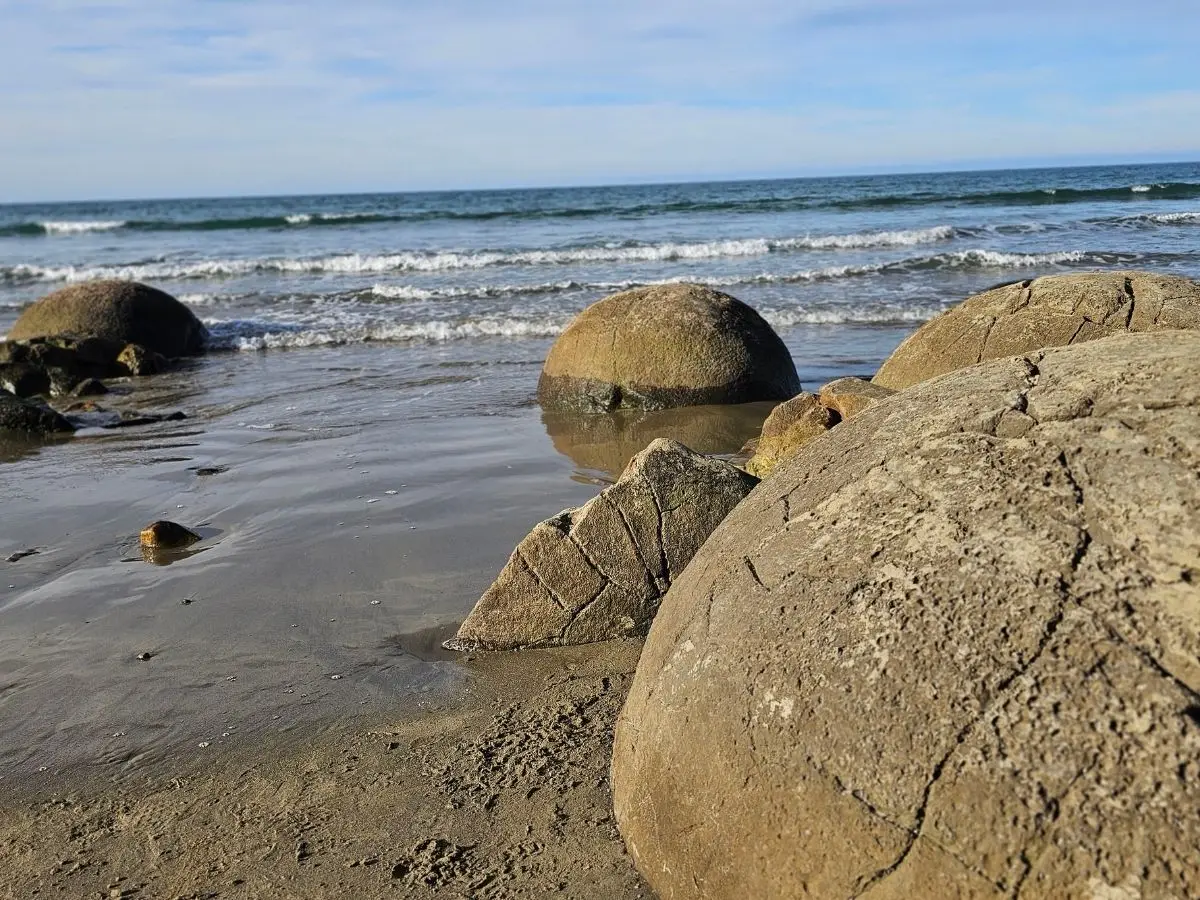
The Moeraki Boulders are genuinely strange. Huge, near-perfectly round stones scattered along a flat beach, some cracked open to show a hollow crystalline interior. You’ll know what you’re looking at geologically, you’ll have seen photos, and they’ll still catch you off guard when you see them sitting there.
The walk itself is short and flat, about 1.8 km return and 30 minutes at an easy pace. You park at the scenic reserve off Moeraki Boulders Road, walk down to the beach, wander among the boulders, then loop back up the stairs through a short bush section to the cafe area and back down to the beach car park.
Getting There
- From Oamaru: about 40 km south on SH1, roughly 30 minutes.
- From Dunedin: about 75 km north on SH1, roughly one hour.
Turn off SH1 onto Moeraki Boulders Road between Hampden and Moeraki. You’ll see it signposted.
There are two car parks. The main scenic reserve car park is at the end of Moeraki Boulders Road. It’s large, free, and has public toilets. The cafe car park is off a private road, first left after turning onto Moeraki Boulders Road, with a short direct track down to the boulders.
The Walk
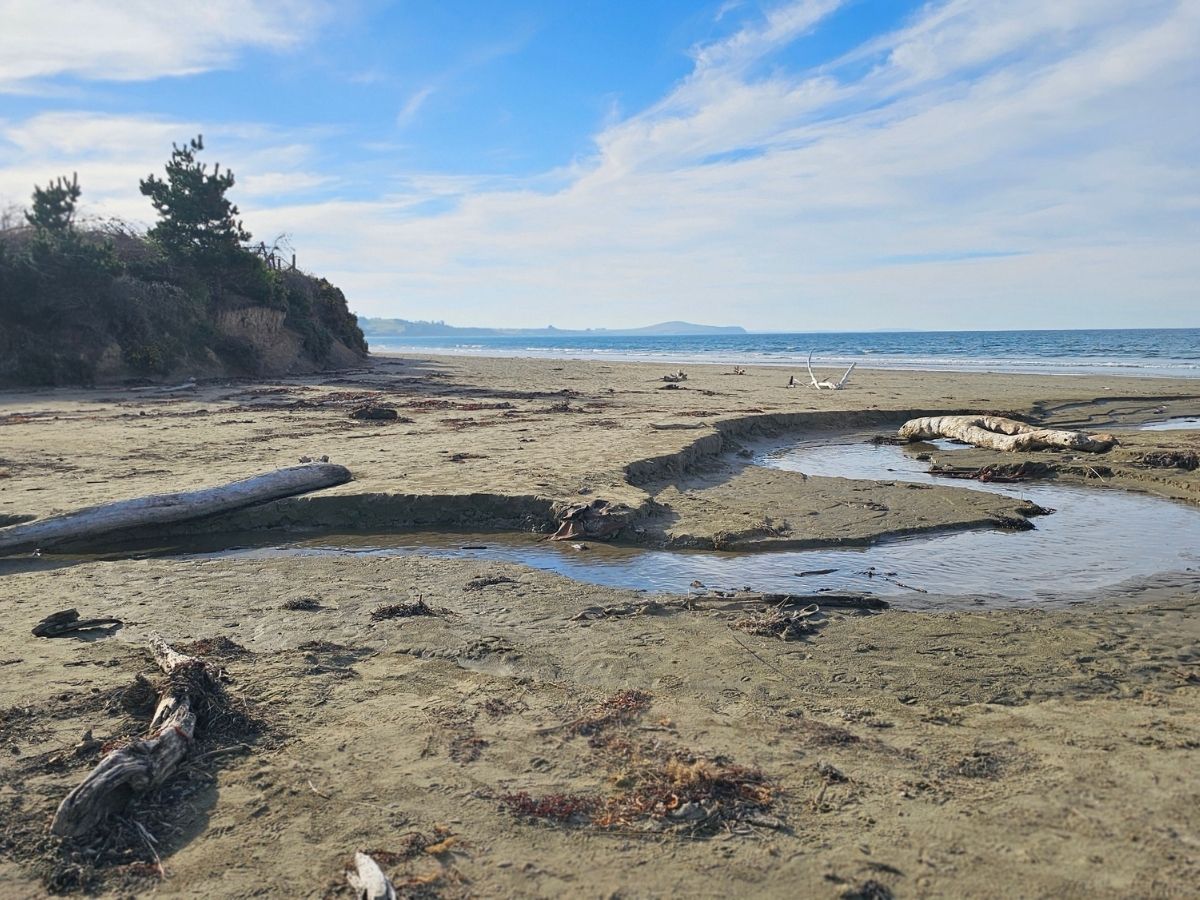
From the scenic reserve car park, follow the track signs down to Koekohe Beach and head along the sand. The boulders are spread across the beach in front of you within a few minutes.
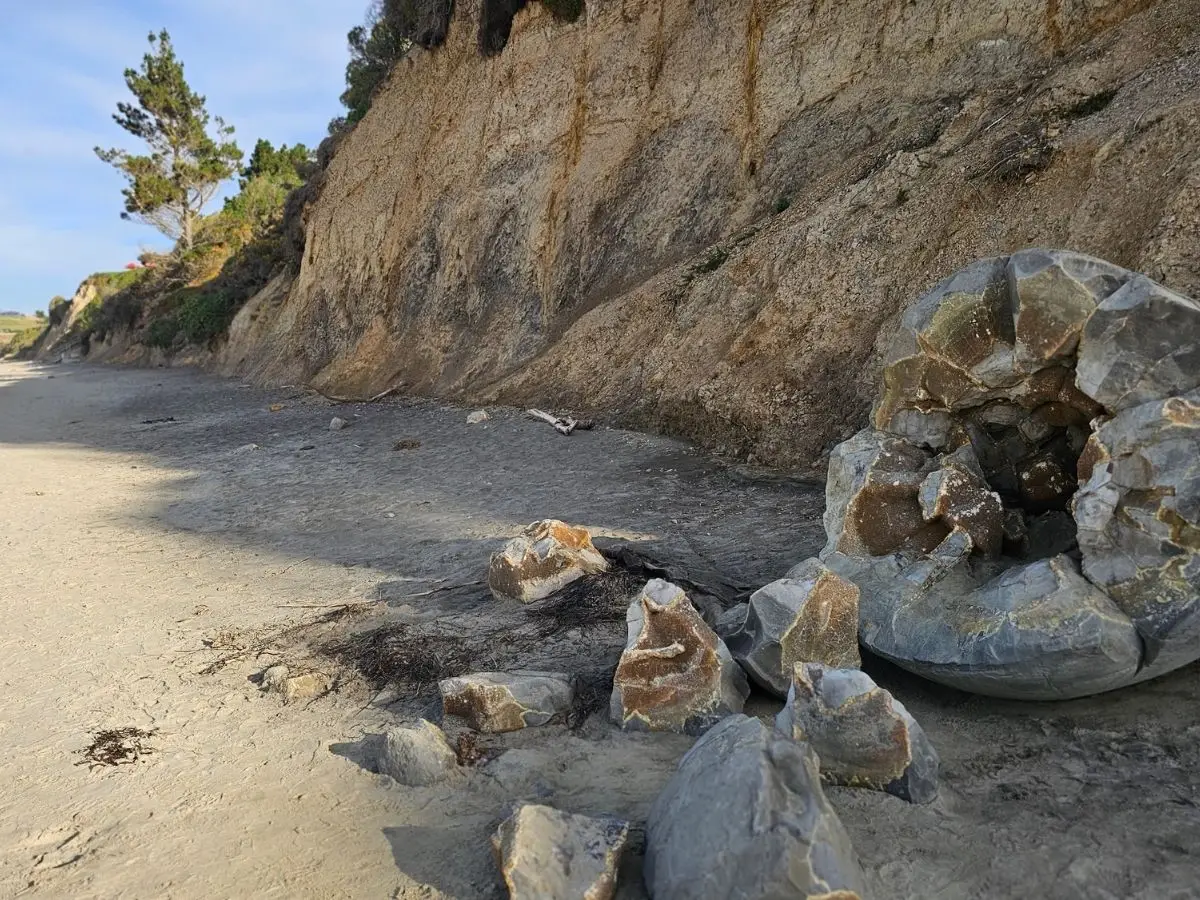
Take your time here. Walk among them, look at them up close, check the ones that have split open. You can see the hollow centre and the crystalline veins inside. A few have been worn down to rubble.
When you’re done, head to the stairs at the far end of the boulder field. These take you up through a short section of native bush and out to the cafe car park above. From there, head back down to the beach and along to the scenic reserve car park.
Good to Know
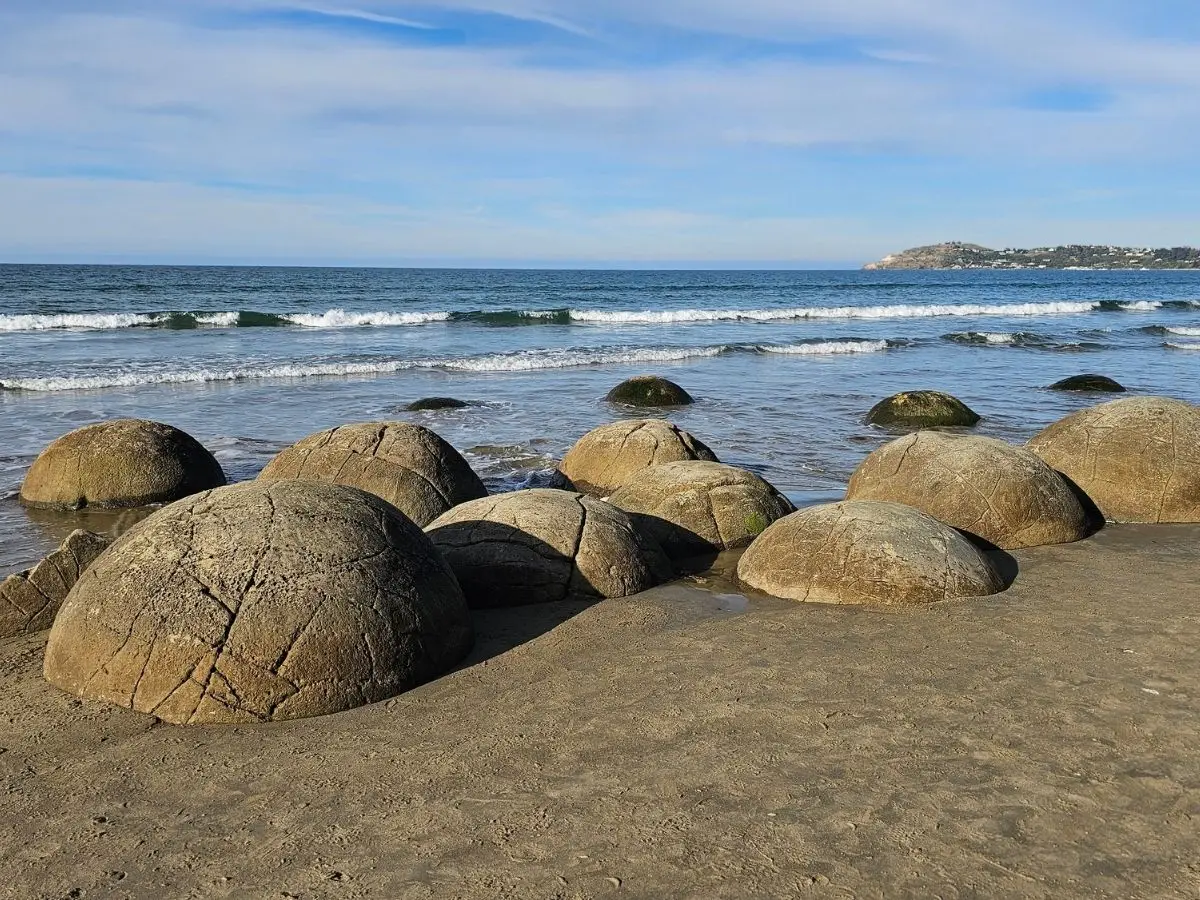
- Tide matters. At high tide, many of the boulders are partially or fully submerged. You’ll still see them, but you won’t get among them. Check the tide before you go. Low tide gives you the full experience, and the wet sand makes for much better photos.
- Dogs are welcome on lead. Standard DOC conservation area rules apply.
- Drones need a permit. DOC requires a permit for drone use on conservation land.
- Crowds. This place gets busy over summer and school holidays, with bus tours stopping regularly. Come early morning or late afternoon if you want more space.
- The cafe sits above the beach at the top of the stairs, with good views and a gift shop. There are also llamas in a pen by the car park.
- Steps. There are wooden steps at both access points up to and down from the cafe.
My Honest Take
I walked in from the main car park, jumped across the small creek then along the beach to the boulders, and returned via the stairs and bush section to the cafe. Took 30 minutes, easy and flat the whole way.
The boulders are as impressive as advertised. What got me was the ones that had broken open. You can see the empty interior and the crystalline veins inside, which makes the whole geology of it click in a way that reading about it doesn’t quite manage.
Start from the main car park and do the loop rather than going straight to the cafe car park. It’s a nicer way to approach them. And pick your tide.