- 5-6km loop through Cornwall Park’s beautiful grounds
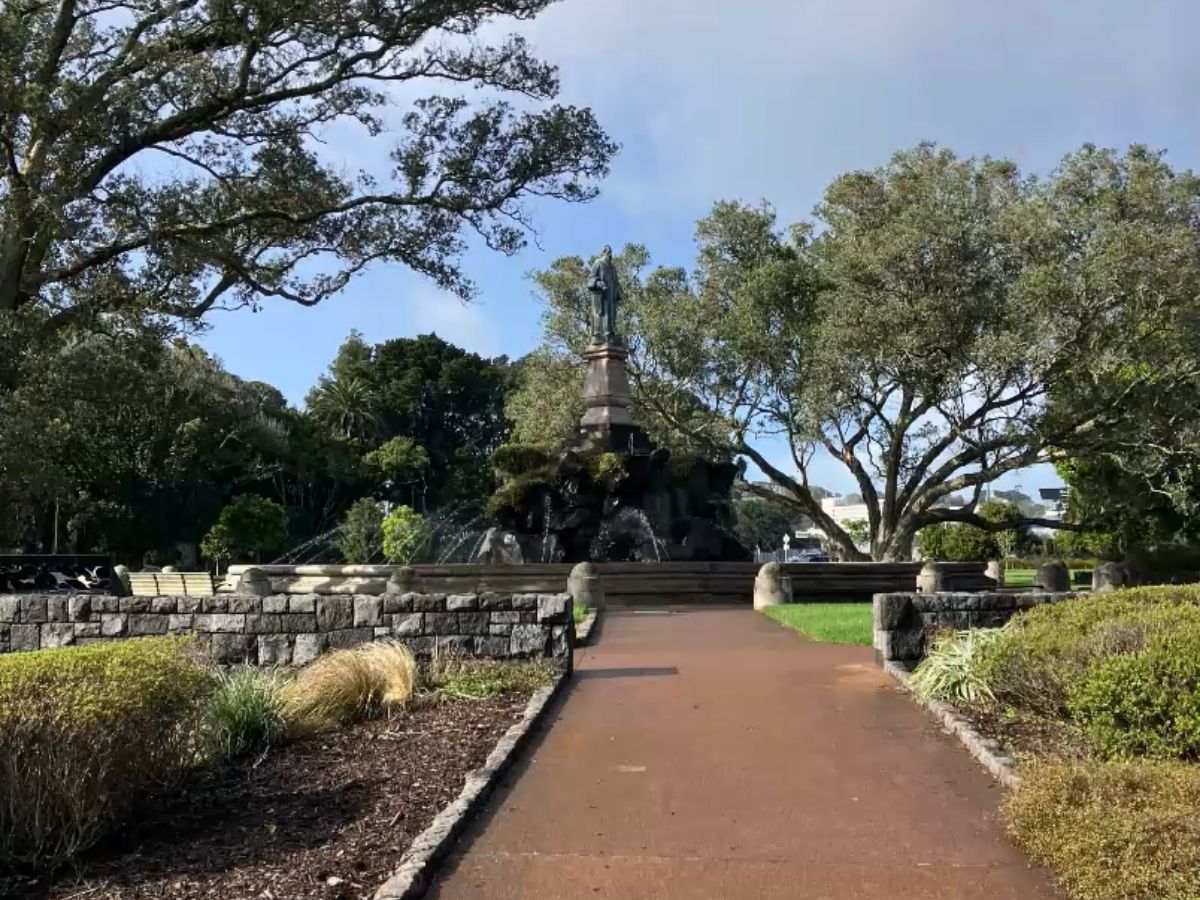
- Start at Sir John Logan Campbell’s statue and fountain
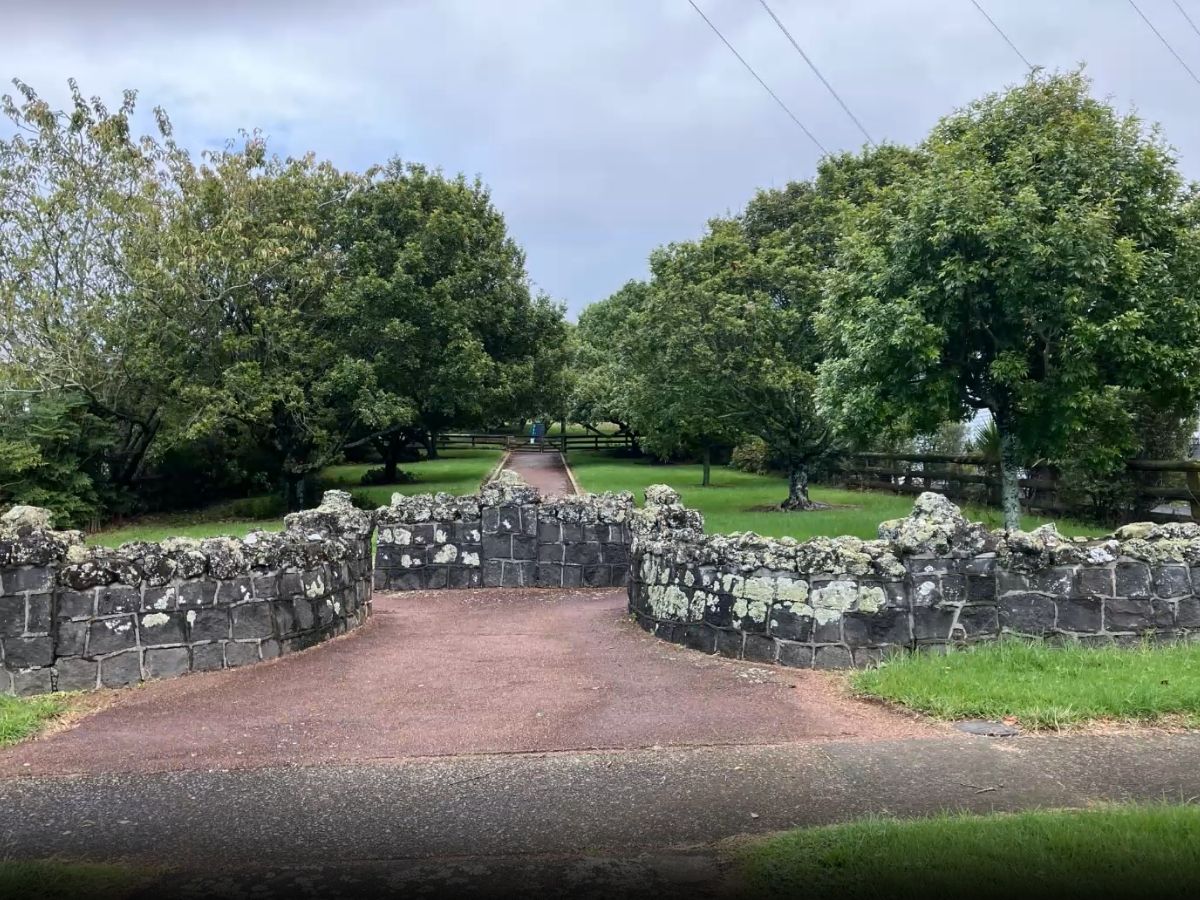
- Walk past farmland, the Band Rotunda, and through the Wisteria Archway
- Learn the story of Auckland’s greatest philanthropic gift
- 1.5-2 hours, easy to moderate
Quick Facts
| Distance: | 5-6km loop |
| Time: | 1.5-2 hours (allow 20-30 minutes at the fountain and information panels) |
| Difficulty: | Easy to moderate (mostly flat, some gentle gradients) |
| Start point: | Logan Campbell Fountain, Manukau Road (corner of Campbell Crescent) |
| Parking: | On surrounding roads and Puriri Drive behind the statue |
| Public transport: | Bus 30 or 309 on Manukau Road |
| Dogs: | On lead at all times |
| Toilets: | Stone building in carpark area, and near the café |
| Café: | Cornwall Park Café near the Band Rotunda |
| BBQ & Picnic: | Barbecues and recreation areas near the roundabout |
In 1901, Sir John Logan Campbell gave the people of New Zealand an extraordinary gift: Cornwall Park. This loop walk takes you through the heart of that gift, from the grand fountain and statue at the park entrance, through rolling farmland, past the café and Band Rotunda, and back through quiet residential streets built on the endowment land that still funds the park today.
It’s a walk through history as much as through parkland. You’ll pass information panels telling Campbell’s remarkable story, see the cricket ground where Cornwall Cricket Club plays, and stroll through the Wisteria Archway that marks one of the park’s most beautiful spots.
Walk route documented by Barry Stafford from Joy of Walking and Rotary Club of Maungakiekie.
Watch: 3D Walk Video
See the full Logan Campbell’s Gift Loop walk in this 3D visualization:
Walk Highlights
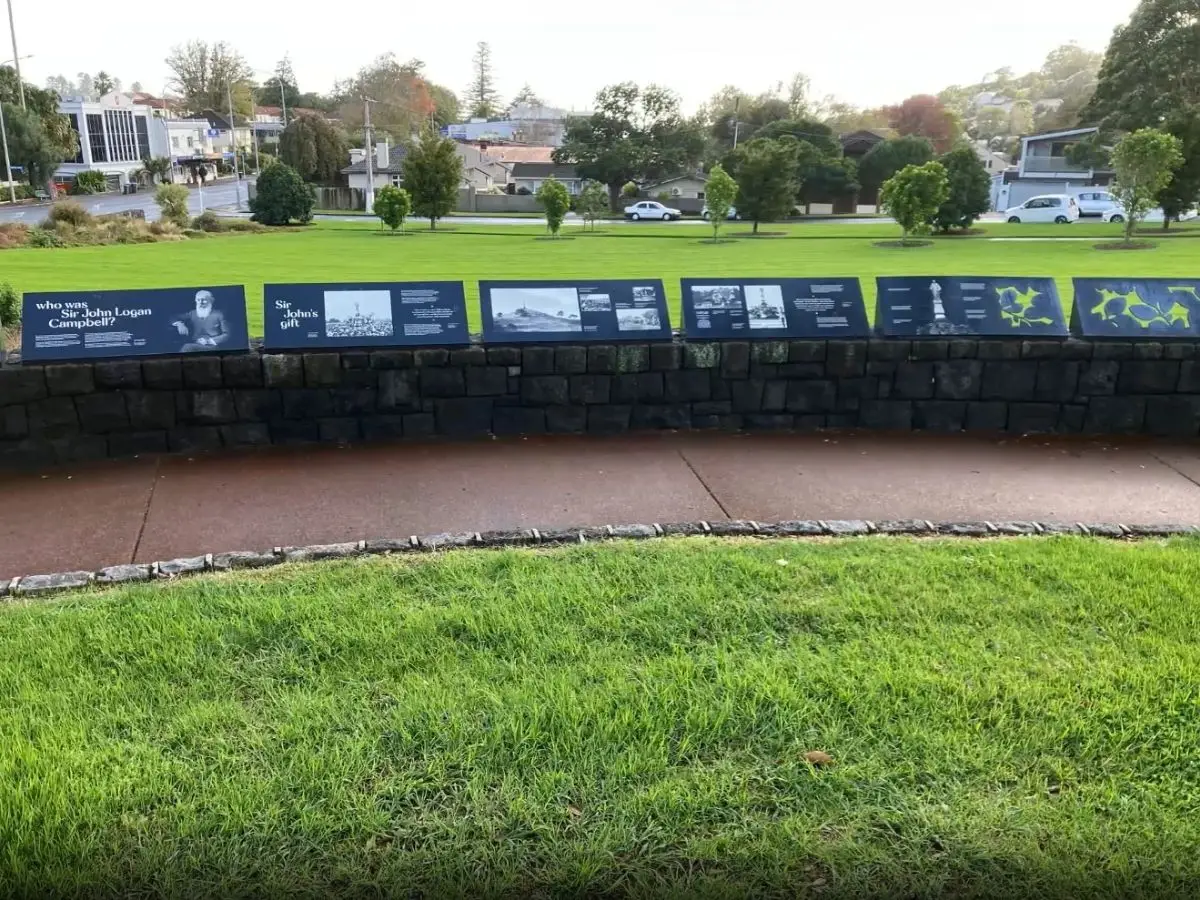
- The Logan Campbell Fountain: The walk begins at the magnificent fountain and statue of Sir John Logan Campbell in the semi-circle of parkland on Manukau Road. On its northern side, a series of information panels tell the story of the park and its donor through historic photographs and narrative. You could easily spend 20-30 minutes here exploring and enjoying the landscaping.
- Cornwall Cricket Ground: After crossing Greenlane Road, you’ll pass the Cornwall Cricket Ground on your right, home of the Cornwall Cricket Club. The path is bordered by large trees and expansive farmland on both sides.
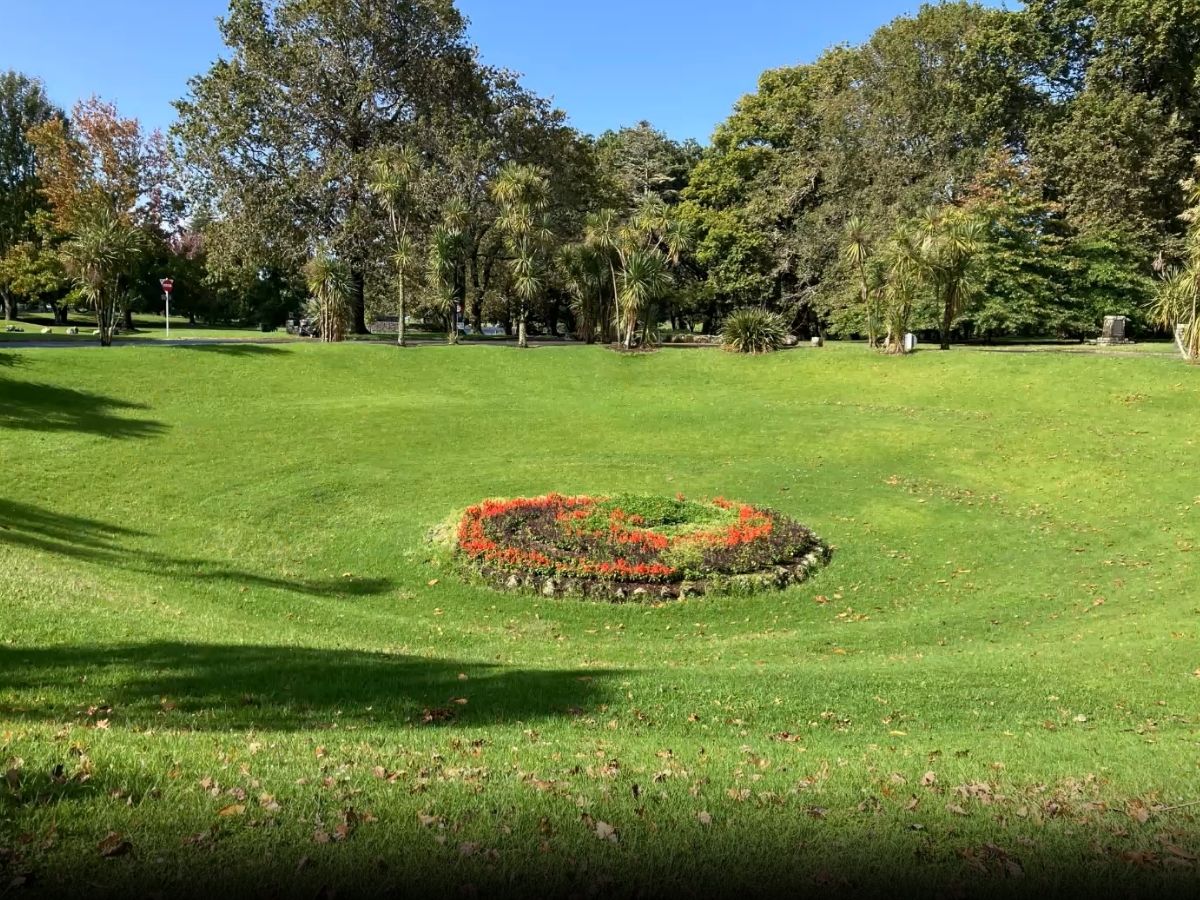
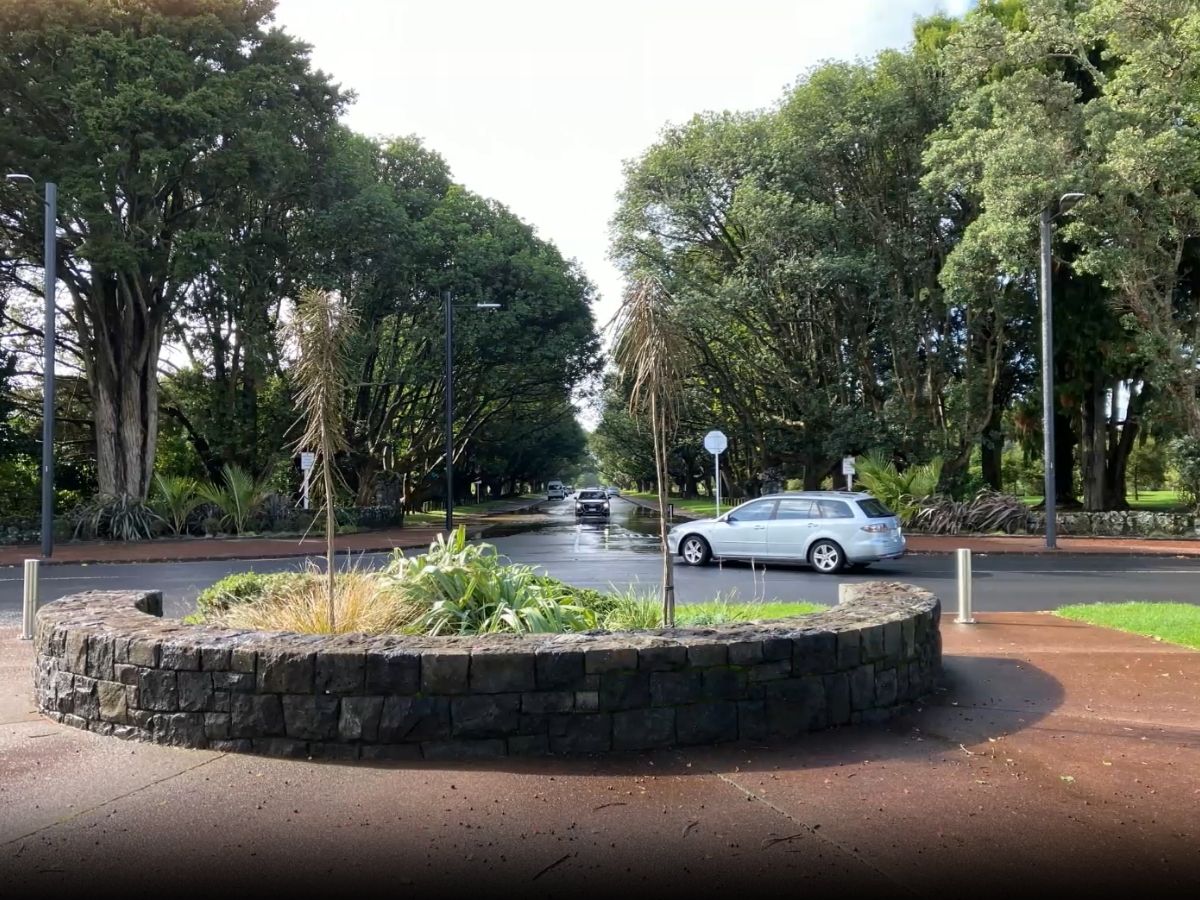
- The Sunken Garden: At the roundabout near the main carpark, you’ll find a beautiful sunken garden. On the eastern side are barbecues and recreation areas, perfect for a picnic.
- Band Rotunda and Wisteria Archway: From the roundabout, head towards the café and look for the broad path that goes past the Band Rotunda on the left. It ends in the beautiful Wisteria Archway, one of the park’s most photographed spots.
- The Endowment Land: The walk along Maungakiekie Avenue and Wheturangi Road takes you past housing on endowment land still owned by the Cornwall Park Trust Board. Income from these leases pays for the park’s maintenance, exactly as Campbell intended over 120 years ago.
Getting There
- By bus: Bus 30 or 309 on Manukau Road. Get off near Campbell Crescent.
- By car: Parking is available on the surrounding roads and on Puriri Drive immediately behind the statue. From Newmarket, travel south along Manukau Road towards Onehunga. About 300 metres after passing through the intersection with Ranfurly Road, you’ll see the semi-circle of parkland on your left.
What You’ll See
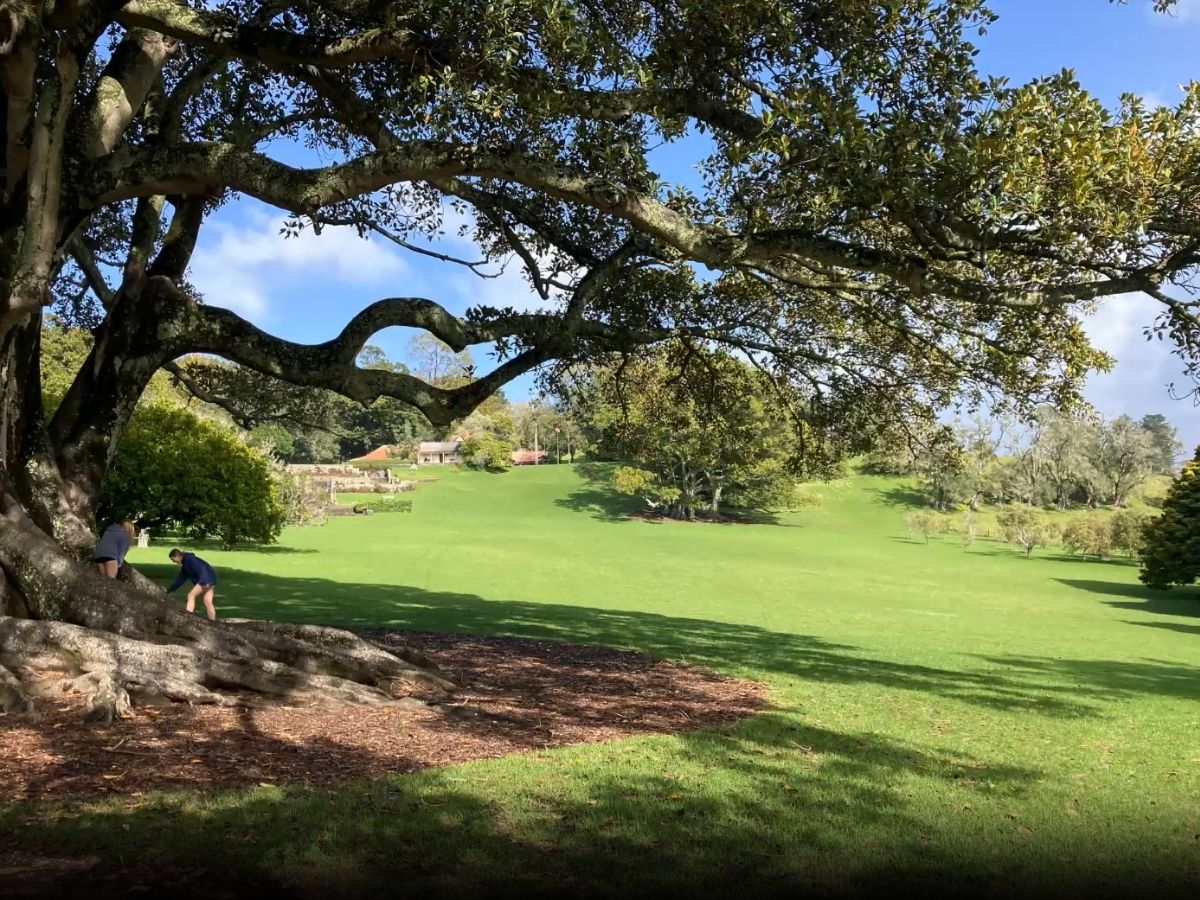
- The walk starts at one of Auckland’s most impressive park entrances. The fountain with Campbell’s statue is surrounded by beautiful landscaping, and the information panels give you real insight into the man and his extraordinary gift.
- Once inside the park proper, you’ll walk through working farmland that’s been here since the earliest European settlers. Cornwall Park is one of the few places in central Auckland where you can still see sheep and cattle grazing.
- The café area near the Band Rotunda is a lovely spot for a coffee break. The Wisteria Archway is particularly beautiful in spring when the wisteria is flowering, but it’s worth walking through any time of year.
- The return leg along Maungakiekie Avenue and Wheturangi Road shows you a different side of the park’s legacy. These streets are lined with homes on land that Campbell set aside to generate income for the park’s upkeep. It’s a clever piece of planning that’s kept Cornwall Park free and beautiful for over a century.
The Story of Logan Campbell’s Gift
Sir John Logan Campbell arrived in New Zealand in 1840 and became one of Auckland’s most successful businessmen. By the time he reached his seventies, he was thinking about how to give back to the city that had made him wealthy.
In 1901, during a royal visit by the Duke and Duchess of Cornwall and York, Campbell handed the title deeds of his estate to the Duke at Government House. He asked that the park be named “Cornwall” in honour of the royal visitors. Campbell had originally intended to call it “Corinth Park.”
The gift was to “the people of New Zealand” rather than just Auckland. This was partly the result of a deal with Premier Richard Seddon to exempt the transfer from duties of three thousand pounds.
Campbell’s vision was that the inner lands would be gifted as parkland, while the outer lands would be leased to generate income for maintenance. That’s exactly how it works today. The Cornwall Park Trust Board owns most of the residential land along Maungakiekie Avenue, Wheturangi Road, and Campbell Road, all leased for housing, with the income paying for the park’s upkeep.
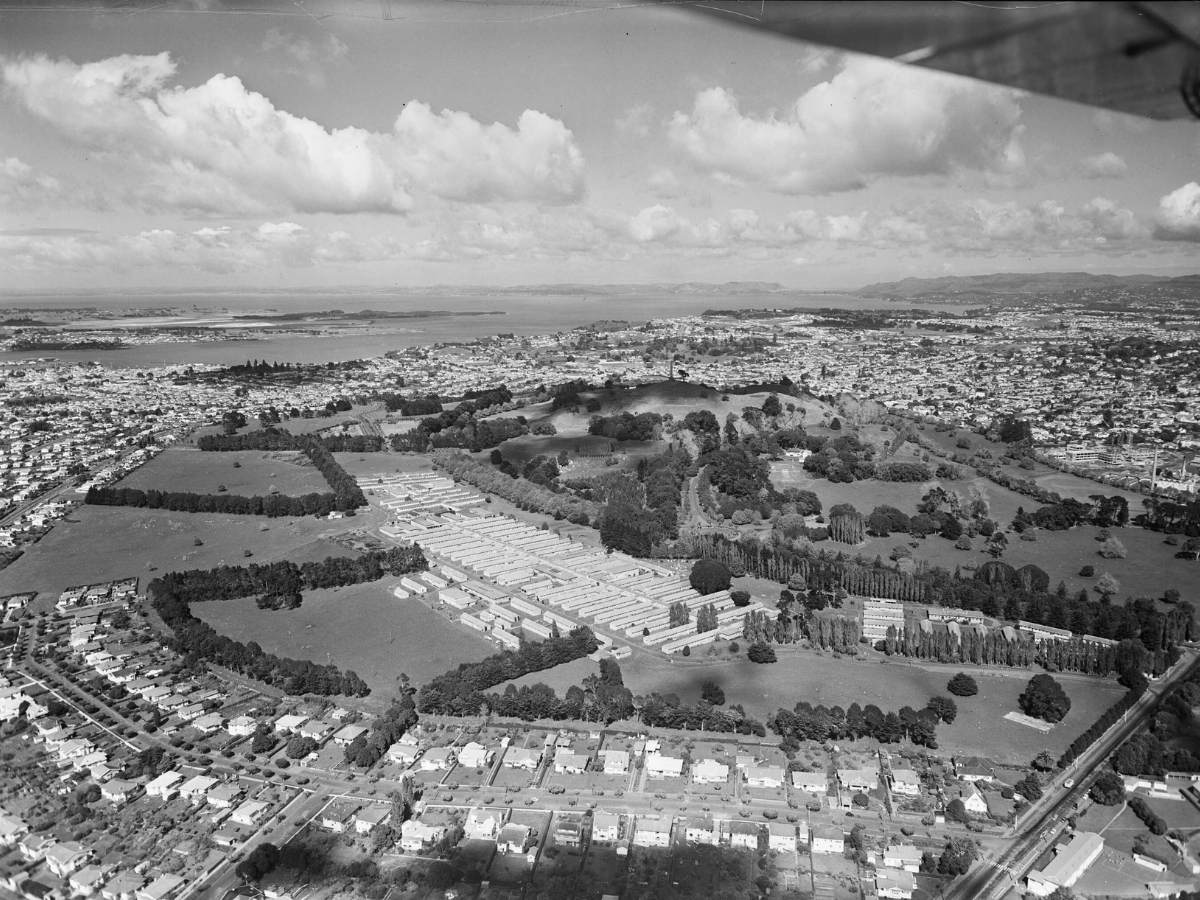
The area near the café has its own interesting history. During World War II, the government took 26 hectares for the 39th General US Army Hospital. After the war, it became temporary accommodation for National Women’s Hospital (1946-1964) and then Cornwall Geriatric Hospital until 1974. Nurses used bikes to get around because of the spread of buildings. The land was finally returned to the Cornwall Park Trust Board in 1976.
When to Go
Cornwall Park is beautiful year-round. Spring brings the wisteria into flower at the archway. Summer is perfect for a picnic after your walk. Autumn colours the trees along Puriri Drive. Winter can be muddy on the grass sections, but the paths are sealed.
Weekends are busier, especially around the café and playground areas. For a quieter walk, come on a weekday morning.
My Honest Take
This isn’t the most dramatic walk in Auckland, but it’s one of the most interesting. The information panels at the start really bring Campbell’s story to life, and once you understand what he did, walking through the park feels different.
I particularly like the contrast between the formal parkland around the café and the working farmland you walk through earlier. And the return leg through the endowment streets shows you how Campbell’s planning continues to work over a century later.
The café is a real highlight. It’s a lovely spot to finish with a coffee and reflect on what you’ve seen.
Would I do it again? Yes. It’s a walk that rewards repeat visits, especially if you take time to read all the information panels and really absorb the history.
Other Walks Nearby
- One Tree Hill Walk
- Cornwall Park Walk
- Mt Eden Walk Circuit
- Auckland Domain
- Epsom Village & Mt Eden Volcano Loop
- Back to all Auckland walks
Walk route documented by Barry Stafford from Joy of Walking and Rotary Club of Maungakiekie.